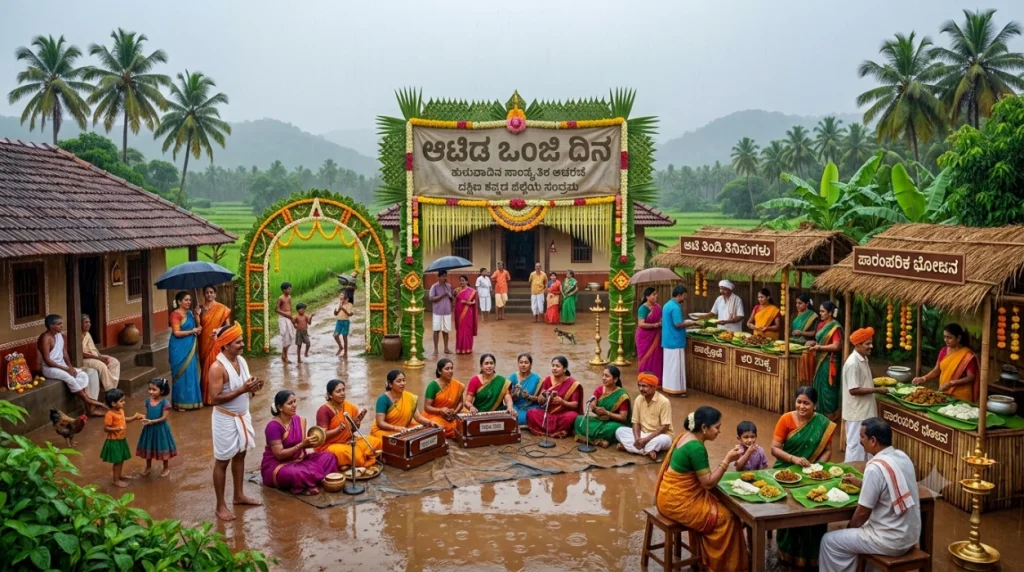
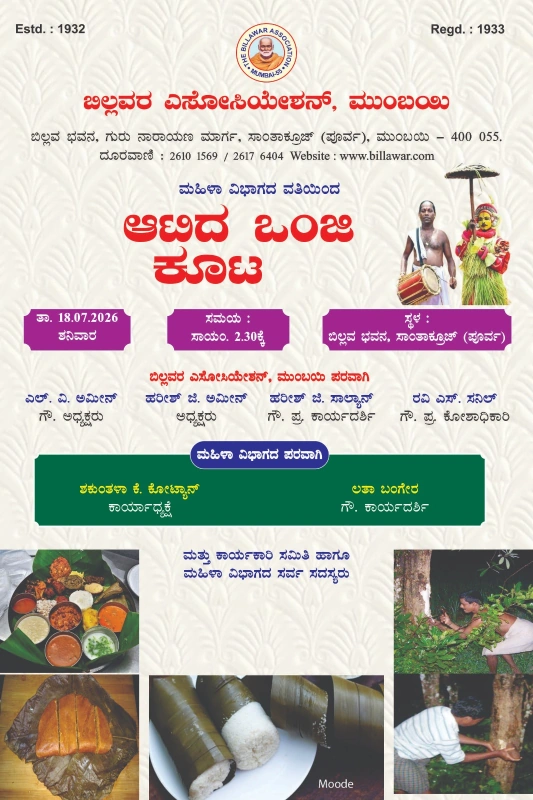
The Billawar Association – Mumbai will be observing “Aatid Onji Dina” on the 18th of July 2.30 PM onwards at Billawar Bhavan Santacruz East.
“Aatid Onji Dina” (Tulu: Aati-da Onji Dina, meaning “A Day in the Month of Aati”) is a traditional cultural observance of the Tulu-speaking region of coastal Karnataka, especially in the districts of Dakshina Kannada (formerly South Kanara) and Udupi.
It is celebrated during Aati, the month that roughly corresponds to July–August, the peak of the southwest monsoon.
Why is it celebrated?
Traditionally, Aati was considered the most difficult period of the agricultural year. Heavy rains limited farming activity, travel was difficult, and illnesses were common. Communities developed customs, special foods, folk performances, and herbal remedies to help people cope with the season. “Aatid Onji Dina” is a way of remembering and preserving these traditions.
Agricultural significance.
For generations, farming was the main occupation in Tulunadu. During Aati, farmers had a brief pause from many field activities because of incessant rain. The month became associated with community gatherings, traditional games, music, dance, storytelling, and sharing food.
Traditional foods
One of the highlights of Aatid Onji Dina is the preparation of seasonal dishes made from local plants, leaves, roots, and vegetables. Many of these foods were believed to improve health and immunity during the monsoon season. Common items include:
Patrode (steamed colocasia-leaf rolls)
Various herbal chutneys
Pundi (rice dumplings)
Seasonal vegetable curries
Aati-specific medicinal preparations and decoctions (Aati Kashaya)
Food is traditionally served on banana leaves and shared communally.
Folk traditions
Many celebrations include:
Traditional Tulu folk dances
Indoor village games such as Chenne Mane.
Songs and storytelling.
Demonstrations of old agricultural practices.
Performances related to Aati Kalenja, a colourful folk tradition associated with blessings, protection, and prosperity during the Aati season.
Modern celebrations
Today, Aatid Onji Dina is often organized by cultural associations, schools, colleges, women’s groups, and Tulu organizations. The aim is to help younger generations understand the hardships, resilience, food traditions, and folklore of their ancestors.
In essence Aatid Onji Dina is not a religious festival in the usual sense. It is more of a cultural and agricultural heritage day that celebrates the wisdom, food, folklore, and community spirit of Tulunadu during the monsoon month of Aati. It serves as a reminder of how earlier generations lived in harmony with nature and adapted to the challenges of the rainy season.
It’s a fascinating tradition and one of the best examples of how coastal Karnataka’s culture is deeply connected to agriculture, seasonal rhythms, and community life.